Be part of the solution.
Become a Substance Abuse Counselor
It takes a lot of heart and dedication to help people overcome addiction. It also takes the right qualifications. Becoming a substance abuse counselor always requires a combination of education, experience, and testing. But there is more than one path you can take to get there…
View All Degrees
Just Getting Started? Explore the Standard Degree Requirements
See what the entry-level degree requirements are in your area with this state-by-state guide showing you exactly how to get started.
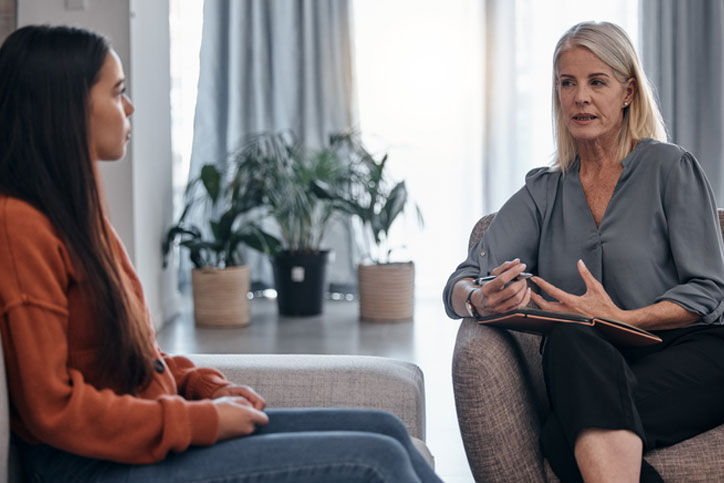
Build on the Bachelor's Degree You Already Have
People frequently come to substance use disorder counseling after earning an undergraduate degree in psychology, social work, or other human services and behavioral science majors.

Become a Substance Abuse Counselor Without a College Degree
You can't expect to do an important job like this without proper training and vetting. But in some states, you can get it through non-collegiate course sequences and training seminars.


Substance Abuse Counselor Degree Options are Available at Every Level
The battle with substance use disorder pits experts educated in the science of addiction and treatment against biological and psychological impulses. You can start developing that expertise with a substance abuse counselor degree at any level.
Undergraduate Certificates or Diplomas
- Intended for: High school graduates seeking entry-level support roles
- Time Required: A year or less
Alcohol and drug abuse counseling certificates are a common first step for anyone looking to enter the field at the level their state allows without a full degree.
Associate Degrees
- Intended for: High school graduates progressing toward higher degrees
- Time Required: Two years
This combination of general education and counseling theory and technique can earn you a SUD tech license or set you up to transfer credits toward a bachelor's degree.
Bachelor's Degrees
- Intended for: High school and associate graduates looking to meet full-authority counselor credentials
- Time Required: Four years
As the standard requirement for professional positions, these degrees combine liberal arts studies with essential counseling skills.
Master's Degrees
- Intended for: Bachelor's graduates advancing to high-level state credentials
- Time Required: One to two years
The top jobs in substance abuse counseling come with advanced studies that blend psychology, psychopharmacology, and clinical skills.
Graduate and Post-Graduate Certificates
- Intended for: Bachelor's and master's graduates seeking specializations
- Time Required: Less than a year
Post-degree certificate programs offer a path to the generalist skills necessary for state credentials or specialized knowledge.
Doctoral Degrees
- Intended for: Existing master's-level counselors moving into university professorships
- Time Required: Three to four years
The big breakthroughs in treatment are made by PhD graduates. Break new ground and train the next generation of counselors.
Your Path from Entry to Expertise
Understanding the typical progression in substance abuse counseling helps you plan your career trajectory and set realistic goals.
Entry Level
Time Frame: 0-2 years
Education: Certificate or Associate Degree
Roles: Peer Support Specialist, SUD Technician
Begin your journey supporting recovery while gaining supervised experience hours.
Professional Counselor
Time Frame: 2-6 years
Education: Bachelor's Degree
Credentials: State License, IC&RC Advanced
Full diagnostic and treatment authority in all 50 states with supervised practice.
Clinical Specialist
Time Frame: 6-10 years
Education: Master's Degree
Credentials: Clinical License, Independent Practice
Supervise other counselors, open private practice, treat complex co-occurring disorders.
Expert & Leader
Time Frame: 10+ years
Education: Doctoral Degree (optional)
Roles: Program Director, Professor, Researcher
Shape the future of addiction treatment through leadership, research, and education.
Timeline represents typical progression. Individual paths vary based on state requirements, prior experience, and career goals.
Degree Comparison at a Glance
Compare time investment, credentials, and career outcomes across all degree levels.
| Degree Level | Time Required | Credentials Earned | Typical Career Outcomes |
|---|---|---|---|
| Certificate/Diploma | 6-12 months | Entry-level support roles in select states | Peer Support, SUD Technician roles |
| Associate Degree | 2 years | SUD Technician, Assistant Counselor (some states) | Support roles, pathway to bachelor's |
| Bachelor's Degree | 4 years | Licensed/Certified Counselor (all states), IC&RC Advanced | Full counselor authority, professional practice |
| Master's Degree | 1-2 years | Clinical License, Independent Practice, Supervision | Clinical specialist, private practice, leadership |
| Graduate Certificate | 6-12 months | Specialization credentials, additional endorsements | Enhanced credentials, specialized practice areas |
| Doctoral Degree | 3-5 years | Professor, Researcher, Policy Expert | University faculty, research, policy leadership |
Timeline represents typical full-time enrollment. Part-time and accelerated options may vary. Credential requirements differ by state.
Substance Abuse Counselor Careers and Other Jobs Available in Support Roles
Every day on the job in addiction counseling is a chance to save a life. Learn what career opportunities exist in substance abuse counseling, the salary you can expect, and how to get the education and professional credentials you need to get hired in each of these key roles.
Peer Support Specialists
People who have been through the depths of addiction themselves and who can offer a hand up in the recovery process.
Substance Use Disorder Technicians
Front line support workers critical to handling day-to-day treatment duties.
Assistant Substance Use Disorder Counselors
Apprentices and assistants in direct support roles managing daily treatment and therapy.
Certified/Licensed Substance Use Disorder Counselors
Experts who diagnose and treat addictions through psychotherapy and other interventions, working under general supervision.
Clinical Substance Use Disorder Counselors
Leaders with expert insight and the clinical experience to deal with co-occurring mental health conditions.
Independent Substance Use Disorder Counselors/Supervisors
Professionals with the legal authority and counseling mastery to supervise counselors and offer services independently.
Step-by-Step Guides for Substance Abuse Counselor Licensing and Certification by State
Each state has its own credentialing standards and distinct licensing levels, each with a defined scope of practice. See where you stand and how to qualify with our detailed state-by-state guides.
Substance Abuse Counseling Certification Resources
Addiction counselor certification is one of the more complicated concepts you'll confront on your way to a career in the field.
What's the Difference Between Being Certified vs. Licensed?
We break down the important differences and explore the similarities between state licensing and different types of certification.
Is It Possible to Earn Substance Abuse Counselor Certification Online?
More states are opening up options to get your education hours for initial certification through online schools.
Comprehensive Guide to NAADAC and IC&RC Certification
Credentials from one or both of the two big names in addiction counseling certification are sure to play a part in your career development.
Resources for Substance Abuse Counseling Students and Professionals
No one recovers from addiction alone. And no one succeeds as an addiction counselor without leaning on resources the professional community makes available.
Financial Aid, Scholarships, and Grants
This guide to funding options will help you get your degree while keeping costs to a minimum.
Continuing Education Resources
These resources will help you stay current on the latest knowledge in the field while keeping your credentials in good standing.
Getting The Supervised Experience
We give you the lowdown on how to get the supervised experience you need to become credentialed in your state.
Substance Abuse Counselor Salary Guide
Wherever you live or whatever your ambitions, we have the salary data for you right here.
Resources for Underrepresented Groups
These resources fill in the gaps for patients on the road to recovery.
Service Member and Veterans Guide
A population full of commitment and energy with an ethos to leave no one behind.
Mental Health and Self-Care Resources
Tools to deal with the trauma and tension that comes from counseling people struggling with addiction day after day.
Success Stories from the Field
Real counselors share their journeys from different backgrounds to meaningful careers in addiction treatment.
"After 15 years in corporate sales, I felt something was missing. I completed my bachelor's in addiction counseling at age 40 and never looked back. Now I run a group practice helping professionals in recovery. It's the most meaningful work I've ever done."
Licensed Clinical Addiction Counselor, Oregon
Career Changer, Bachelor's → Master's pathway
"The military taught me resilience, but I struggled with my own demons after deployment. Getting clean and becoming a peer support specialist let me turn my experience into hope for other veterans."
Certified Peer Support Specialist, Texas
Veteran, Peer Support → Bachelor's in progress
"I earned my associate degree while working nights at a treatment center, then completed my bachelor's online. My employer supported me every step. Now I supervise the intake department and help guide new counselors."
Senior Substance Abuse Counselor, Florida
Traditional path, Associate → Bachelor's → Supervision
"As a single mom working full-time, I thought a counseling career was out of reach. Online master's programs changed everything. I can help people across my state while being present for my kids."
Licensed Professional Counselor, North Carolina
Online learner, Psychology BA → Online MA
"Growing up in an immigrant family where mental health wasn't discussed, I saw how stigma prevented people from getting help. Now as a bilingual addiction counselor, I serve my community and break down cultural barriers."
Certified Addiction Counselor, California
First-generation student, Scholarship recipient
"After a decade of clinical practice, I wanted to contribute to the research that improves treatment outcomes. My PhD lets me teach the next generation while conducting studies on medication-assisted treatment effectiveness."
Associate Professor, Washington
Clinician to academic, MS → PhD pathway
Frequently Asked Questions About Becoming a Substance Abuse Counselor
Quick answers to the most common questions about education, credentials, and career paths in addiction counseling.
How long does it take to become a substance abuse counselor?
The timeline varies by state and your starting point. Entry-level positions (peer support, SUD technician) can be reached in 6 months to 2 years with a certificate or associate degree. Full licensure typically requires a bachelor's degree (4 years) plus 2,000-4,000 supervised clinical hours (1-2 additional years). Master's-level clinical licensure adds another 1-3 years. Most counselors reach full professional credentials in 4-7 years total.
Do I need a degree to become a substance abuse counselor?
Requirements vary by state and position level. Some states allow entry-level support roles (peer specialist, assistant counselor) with non-degree certificates. Most states require at least a bachelor's degree for full licensure as a substance abuse counselor. Check your state's specific requirements, as most states now require a bachelor's degree or higher for independent licensure or practice, depending on credential level.
What's the difference between certification and licensure?
State licensure is legally required to practice as a substance abuse counselor and is granted by state regulatory boards. It carries legal scope of practice and is mandatory for employment. National certification (through IC&RC or NAADAC) is voluntary but demonstrates competency and often helps meet state requirements.
Can I become a substance abuse counselor with an online degree?
Yes. Online degrees from regionally accredited institutions meet licensing requirements in all 50 states. The key is ensuring your program includes required supervised practicum/internship hours. Clinical training must be in-person regardless of how you earn your degree. Verify your program is accredited by CACREP or meets your state board's specific requirements.
How much do substance abuse counselors make?
Substance abuse counselor salaries vary widely based on credential level, experience, geographic location, and work setting. Entry-level support positions typically earn less than fully licensed professional counselors, while master's-level clinical counselors and those in independent practice generally earn more. For detailed salary information specific to your state and credential level, visit our comprehensive salary guide.
Online Substance Abuse Counselor Degrees and Training Programs
Even for the most dedicated student, meeting the education and experience requirements to become a credentialed substance abuse counselor can be challenging. Online substance use disorder counseling degree programs make it a whole lot easier to get the training you need:

✓ Wider Program Selection
Enjoy a larger selection of schools and specialist program options, not just those close to home.

✓ Flexible Scheduling
Attend class and handle projects on your own time, leaving room for work and family.

✓ Cost Savings
Keep costs in check without having to relocate to the school you want to attend.
The Latest News in the World of Substance Abuse Counseling
The science behind our understanding of addiction is revealing new insights all the time. Stay up on the latest developments and need-to-know news in substance abuse counseling right here.


Psychology vs Social Work vs Counseling: Best Degree for Addiction Counseling
Quick Answer For hands-on addiction counseling, a master's in Clinical Mental Health Counseling (CMHC) or addiction counseling is the most direct path. Social work (MSW) offers similar therapy skills plus broader flexibility. Psychology is best if you want a doctorate-level psychologist role focused on research, assessment, or specialized treatment. Table

Substance Abuse Counseling Practicum vs. Internship: What's the Difference and What to Expect in 2026
Quick Answer A practicum is your first supervised clinical experience, typically requiring 100 hours with extensive oversight and observation. An internship follows, requiring 600+ hours, where you carry a real caseload with increasing independence. Both are required for substance abuse counselor licensure, but practicums focus on learning fundamentals while internships

Substance Abuse Counselor Specializations That Increase Your Salary: MAT, Adolescent, Co-Occurring Disorders
Quick Answer Three specializations consistently boost substance abuse counselor salaries: Medication-Assisted Treatment (MAT) counselors earn $65,000 to $111,000 annually, adolescent specialists with NCAAC certification command premiums above the $59,190 national median, and co-occurring disorders professionals (CCDPs) make $65,000 to $90,000, with some positions reaching $146,000. Specialized credentials typically pay for

Technology Addiction Counseling Degree Programs: Substance Abuse Counseling Degrees Now Addressing Gaming, Social Media, and Other Technology Addictions
Quick Answer Substance abuse counselors are well-positioned to treat technology addiction using their existing therapeutic skills. Evidence-based approaches like CBT, motivational interviewing, and group therapy effectively address gaming disorders, social media dependency, and smartphone addiction. With proper training in assessment tools and digital wellness strategies, SACs can help clients develop

What Substance Abuse Counselors Need to Know About Psychedelic-Assisted Therapy in 2026
Quick Answer Substance abuse counselors can't legally administer psychedelics yet (except ketamine with medical credentials), but they can provide integration therapy, harm reduction counseling, and build referral networks now. Most comprehensive training programs require existing mental health licensure and 100-150 hours of specialized education, preparing counselors for when FDA approval

Can You Work as a Substance Abuse Counselor While in Recovery?
Quick Answer Yes, you can work as a substance abuse counselor while in recovery. Peer support specialist roles specifically require lived experience and typically need 1-2 years of continuous sobriety. Licensed professional counselor positions don't require recovery status and focus on education and clinical competency instead. Table of Contents Yes,